
I wanted to start this blog by saying that LinkedIn has become the new place for businesses to engage, but that isn’t accurate. Instead, it’s been that place for years. Yet, I still see businesses that don’t use it or find any potential in it.
To get a good idea of how powerful it is, here are a few statistics I found from a quick search.
- 59 million companies have a LinkedIn page and 2.7 million post weekly.
- 40% of LinkedIn users engage with business pages each week.
- 96% of B2Bs used LinkedIn to share content.
- 77% of content marketers agree that LinkedIn provides the best organic results.
- 65% of B2Bs have gotten customers through LinkedIn.
- 89% of B2B marketers rely on LinkedIn for lead generation.
- 62% of B2B marketers successfully generate leads.
If you’re a B2B, you must be on LinkedIn to stay competitive. It might not have been necessary 10 years ago, but it is today. Everything is increasingly done digitally and that includes sales, business development, and lead generation.
The good news is that LinkedIn is pretty straightforward to use and has more capabilities to help businesses now than ever.
Before Getting Started on LinkedIn
Before you put up posts as your business on LinkedIn, make sure that 1.) you have a business page and 2.) you have more than one admin in case you get locked out of it. After that, you’ll want to start creating a plan for what to post, how frequently, and who will manage creating and posting the content.
Tips on Creating LinkedIn Posts
My best advice for posting content on any social platform is to post thoughtfully. You want intention behind everything you post, knowing users see content everywhere constantly.
Frequency and Time
Businesses should aim for at least once a week since they can grow their followers seven times faster than pages that post monthly. One to three times a week is the route I typically follow because it’s hard for businesses to post more frequently than that, but you can post as frequently as one to two times a day.
Aim to post during the typical work week hours (9 a.m. – 5 p.m.) and if you want to get even more specific, Tuesdays, Wednesdays, and Thursdays get the most engagement.
Content
Users love variety, but also consistency in content. A mix of company news, employee content, and industry posts is a great way to achieve that goal without alienating followers. Plus, it produces credibility. Another way to stand out is through company-branded content where images and videos use brand colors, fonts, imagery, and logos. It gives you brand recognition and again, credibility.
When writing the copy, tagging companies and people is ideal because it generates engagement from those users, businesses, and their audiences. Hashtags aren’t as popular now, but using them in LinkedIn posts can help you find new audiences. Both tags and hashtags should be used selectively so that it doesn’t look like spam.
Above all, keep the content quality high by staying helpful and insightful. If it’s an account you would want to follow, you’re doing it right.
Tips on LinkedIn Engagement
Keep the conversations going on LinkedIn by encouraging engagement on business and employee posts.
Business Posts
Businesses can like and comment on LinkedIn just like accounts, so use it to your advantage when another business or user shares your content and tags you in the post. It’s also great when users engage with business posts so you can respond as the business, especially if those users are employees. Comments always generate more engagement than likes.
But please avoid this mistake: Don’t like or share your business page posts as the business itself. I have seen page admins like their business page posts as the business account, not as the user. I’ve also seen them reshare their business page posts as the business multiple times.
It’s an accident, but these scenarios give the impression that you don’t know how to use the platform. If you’re a business page admin on any social network, double-check which account you’re engaging as before you like, comment on, or share the post.
But when the opportunity arises, engage in posts you’re tagged in whenever possible. It could be a post from an employee, a vendor you work with, or an industry partner. If it’s a positive post that makes sense to share, share it and include a caption to personalize it.
Employee Posts
I highly encourage you to get as many employees as possible to share your business page content, especially managers and executives. These people will get your content to their audiences and more without much effort on your part. You can do this by having employees follow your business page and regularly share post links through company email newsletters.
Company leaders should use LinkedIn, but if they don’t, schedule posts for them. Your company CMS may allow you to do it for free for a select number of users, or you can use a social media scheduling platform as a cost depending on the number of users. It will help your business get followers and generate brand awareness, but it will also prop up your leadership team as thought leaders, which builds business credibility.
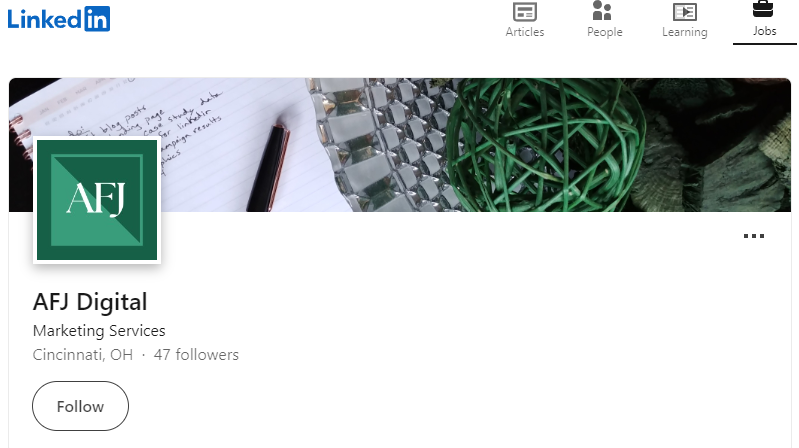
LinkedIn is a powerful B2B tool as long as businesses use it effectively, so if you need help, contact AFJ Digital.
 AFJ Digital
Leave a Reply